
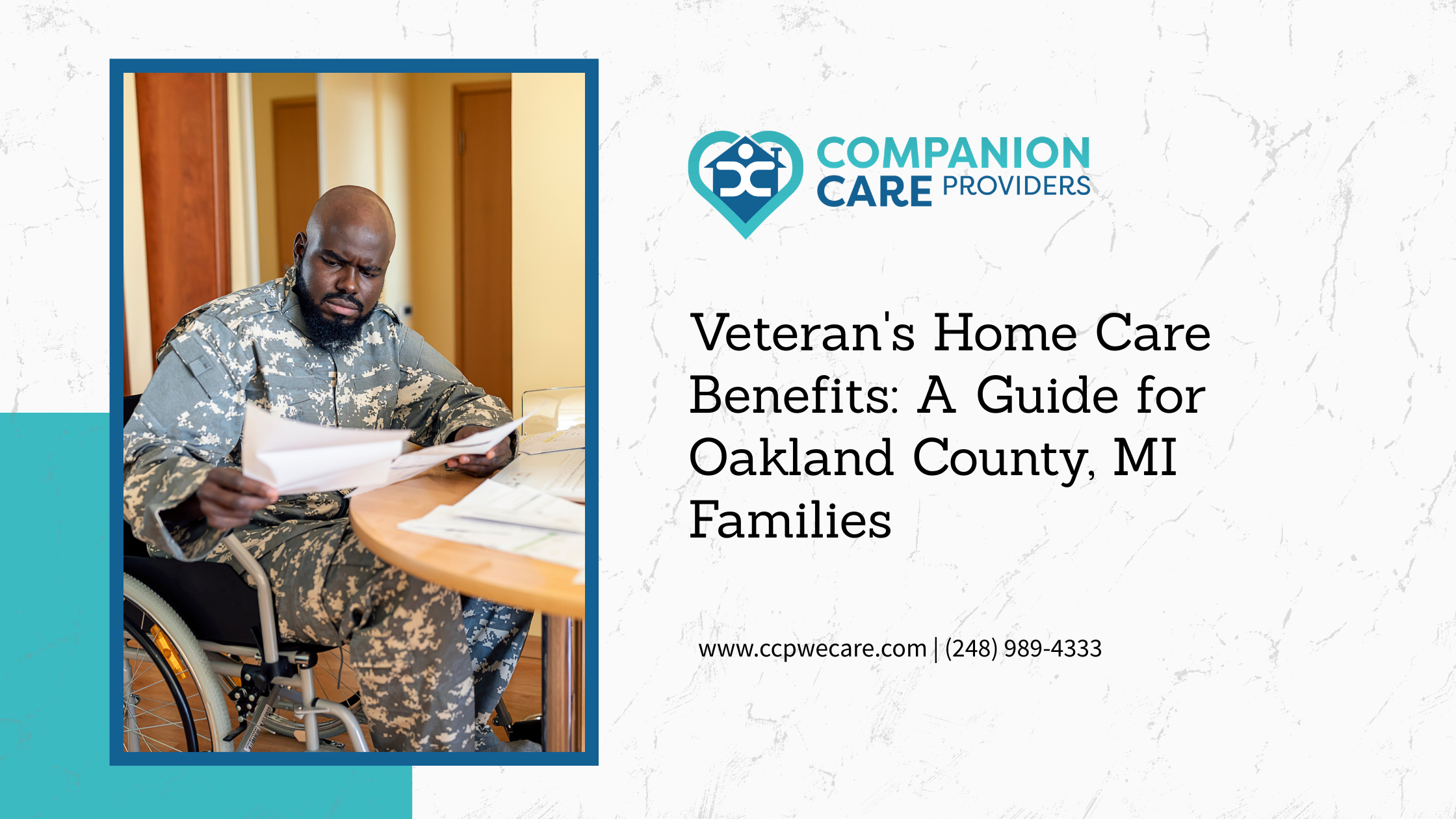
Navigating veteran home care benefits can feel complex, especially when home care needs increase. For families in Oakland County, understanding how benefits work, who qualifies, and how local services fit into the process can make accessing support clearer and less overwhelming.
Why Veteran Home Care Benefits Matter for Families
Veteran home care benefits help bridge the gap between daily care needs and long-term independence. These benefits are designed to support veterans who prefer to remain at home while receiving assistance with routine activities. Understanding the purpose of these benefits helps families plan care with confidence rather than react in urgent situations.
- Daily living support: Helps cover assistance with mobility, personal care, and household tasks
- Care continuity: Allows veterans to receive support in familiar surroundings
- Family relief: Reduces physical and emotional strain on family caregivers
Recognizing the value of these benefits sets the foundation for understanding eligibility.
Who May Qualify for Veteran Home Care Benefits
Eligibility depends on several factors tied to service history, health needs, and living situation. Knowing these requirements early helps families avoid delays when care becomes necessary. Qualification criteria often overlap, making review essential.
- Service history: Veterans must meet specific active-duty service requirements
- Care needs: Assistance is typically tied to limitations with daily activities
- Residency status: Benefits are often applied to veterans living at home or with family
Once eligibility is clear, families can explore how benefits are structured.
How Veteran Home Care Benefits Are Structured
Veteran home care benefits may be delivered through different programs depending on individual circumstances. Each structure determines how care is accessed and managed. Understanding these structures helps families choose appropriate next steps.
- VA-supported programs: Provide funding or coordination for in-home assistance
- Care management pathways: Connect veterans with approved service providers
- Supplemental options: Allow private services to complement VA benefits
This structure naturally leads to understanding which types of care are covered.
Types of In-Home Care Covered by Veteran Benefits
Home care benefits are designed to support daily function rather than replace medical treatment. Covered services often focus on safety, routine assistance, and supervision. These services align closely with real-life needs at home.
- Personal care assistance: Support with bathing, grooming, and dressing
- Mobility support: Help with transfers, walking, and fall prevention
- Daily routine assistance: Aid with meals, reminders, and light housekeeping
For many families, knowing how to apply for these benefits is the next concern.
Steps to Applying for Veteran Home Care Benefits
Applying for benefits involves documentation, assessments, and coordination with care providers. A clear process helps reduce frustration during application stages. Preparation improves approval timelines.
- Documentation review: Gather service records and medical information
- Care needs assessment: Evaluate daily assistance requirements
- Benefit submission: Apply through appropriate VA channels or advisors
After approval, families often explore how local care providers fit into the plan.
How Local Home Care Providers Support Veterans
Local agencies play an important role in delivering consistent in-home care once benefits are approved. Working with a nearby provider improves coordination and reliability. Local support strengthens care continuity.
- Routine consistency: Caregivers understand local schedules and home environments
- Flexible care plans: Services adapt as care needs change
- Ongoing communication: Families stay informed about daily care activities
Many families compare family caregiving with professional support at this stage.
Comparing Family Caregiving and Professional Veteran Care
Both family involvement and professional services offer important benefits. Understanding their differences helps families balance support effectively. Many households choose a combined approach.
- Family caregiving: Offers familiarity but can become physically demanding
- Professional veteran care: Provides structured assistance through Veteran Care services designed for veteran-specific needs
- Supplemental relief: Temporary support through Respite Care services helps prevent caregiver burnout
Cost considerations often follow these decisions.
Cost Factors Related to Veteran Home Care
While many benefits offset care costs, families should still understand potential expenses. Planning ahead avoids unexpected financial stress. Cost factors vary by situation.
- Level of care needed: Increased assistance may require additional hours
- Service combinations: Blending benefits with private care affects overall costs
- Care duration: Long-term support requires financial planning
Tools and resources help families manage care efficiently.
Tools and Resources That Help Manage Veteran Care
Organization and planning tools support smoother care coordination. These resources help families stay proactive rather than reactive. They improve communication and consistency.
- Care schedules: Track daily services and caregiver visits
- Benefit documentation: Maintain records for ongoing eligibility
- Care coordination notes: Share updates between family and providers
Avoiding common mistakes helps these tools remain effective.
Common Challenges Families Face With Veteran Benefits
Even with benefits available, challenges can arise during application or care delivery. Awareness helps families respond more effectively. Preparation reduces delays.
- Incomplete applications: Missing records slow approval timelines
- Delayed reassessments: Changes in care needs may go unreported
- Limited local coordination: Distant providers reduce care consistency
Local examples show how these challenges appear in Oakland County.
Real-World Veteran Care Scenarios in Oakland County
Veterans in Oakland County often share similar care concerns shaped by local housing and family dynamics. These scenarios reflect practical realities. Local context strengthens understanding.
- Aging veterans at home: Increased need for daily assistance over time
- Family caregivers balancing work: Professional support fills care gaps
- Changing mobility needs: Care plans evolve with health changes
Best practices connect these lessons into long-term planning.
Best Practices for Long-Term Veteran Home Care Planning
Sustainable care requires ongoing planning rather than one-time decisions. These practices support long-term stability. Consistency improves outcomes.
- Regular care reviews: Adjust services as needs change
- Professional collaboration: Use in-home care providers for guidance
- Family communication: Maintain shared expectations and updates
Local resources help reinforce these practices.
Accessing Veteran Home Care Support in Oakland County
Local availability improves care coordination and response times. Companion Care Providers LLC supports veterans and families across Southeast Michigan. Proximity strengthens reliability.
- Service coverage: Available across Oakland, Wayne, and Macomb counties through the service areas served
- Veteran-focused care: Services tailored to veteran routines and preferences
- Educational support: Additional guidance available through the home care blog resources
Families often have questions before moving forward.
Common Questions About Veteran Home Care Benefits
Families frequently seek clarity before starting care or applying for benefits. These answers address common concerns while pointing to helpful support.
Do veteran home care benefits cover in-home assistance?
Yes. Many programs support in-home assistance when aligned with care needs, especially when coordinated with professional Veteran Care services.
Can families combine VA benefits with private home care?
In many cases, benefits can be supplemented with private services such as Specialized Care services to meet evolving needs.
Are benefits limited to certain counties?
Benefits are federally managed, but local providers serving Oakland County improve coordination and consistency.
Get Veteran-Focused Home Care Support From Companion Care Providers LLC
Understanding veteran home care benefits is easier when paired with experienced local support. Professional in-home care helps translate benefits into consistent daily assistance.
Companion Care Providers LLC serves veterans and families across Oakland, Wayne, and Macomb Counties with care services designed to support routine needs, safety, and independence.
📍 Address: 801 West Big Beaver Road, Suite 300, Troy, MI 48084
📞 Call: (248) 989-4333 to discuss veteran home care options
📧 Email: info@ccpwecare.com
🌐 Explore care services: Contact Companion Care Providers LLC
Taking the next step toward veteran home care support helps families plan with clarity, confidence, and local guidance.